Everything You Need to Know About Hair Removal If You Have Psoriasis
 AdobeSave this storySave this story
While psoriasis can come with its fair share of everyday annoyances, hair removal should be a relative breeze as long as you don’t have an active flare-up. “The truth is that most people with psoriasis are not tremendously bothered by gentle hair removal as long as their psoriasis is controlled,” says Shira Y. Wieder, MD, a board-certified dermatologist at Montefiore Einstein Advanced Care in New York City.
Anyone who hasn’t found an effective method to ward off their psoriasis flares should take serious precautions before doing any type of hair removal, as it carries a real risk of triggering new plaques even in areas that weren’t affected before. However, if your psoriasis is well managed by prescription treatments, you’ll likely be able to shave, laser, wax, and pluck almost exactly like anyone else. “The risk of triggering new plaques drops but doesn’t fully disappear,” says Divya Shokeen, MD, a board-certified dermatologist and founder of OSVI Dermatology and Surgical Institute in California. Here are a few precautions to keep in mind to avoid irritating your skin and triggering a flare-up.
Meet the experts:
- Shailer Carruth is a licensed esthetician in Brattleboro, Vermont.
- Tracy Evans, MD, is a board-certified dermatologist and the medical director of Pacific Skin and Cosmetic Dermatology in California.
- Divya Shokeen, MD, is a board-certified dermatologist and founder of OSVI Dermatology and Surgical Institute in California.
- Shira Y. Wieder, MD, is a board-certified dermatologist at Montefiore Einstein Advanced Care in New York City.
In this story:
- How having psoriasis can affect hair removal
- The best hair removal methods for psoriasis-prone skin
- Hair removal methods to approach with caution
- What to do if hair removal causes a flare-up
How Having Psoriasis Can Affect Hair Removal
“It’s one word: Koebnerization,” Dr. Shokeen says of what can make hair removal trickier for people with any inflammatory condition like psoriasis, especially during an active flare. For people with psoriasis, the Koebner effect occurs when trauma stimulates the immune system to develop plaques, Dr. Wieder says. In other words, if your psoriasis is active and you suffer any sort of minor skin injury (like a nick from a razor or a burn from too-hot wax), you could see more psoriasis, especially if it’s close to a psoriatic plaque, Dr. Shokeen says.
She emphasizes that this does not mean your psoriasis is “spreading” because psoriasis is not an infectious disease (meaning it’s not contagious). Instead, these minor injuries can start a new inflammatory reaction anywhere on the body, especially if your psoriasis is not controlled by medication.
In addition to the risk of Koebnerization, people with psoriasis tend to have drier skin, which compromises the skin barrier, Dr. Shokeen says. This means the skin can become irritated fairly easily. As a result, it “tends to develop more redness, stinging, or lingering marks from things that a non-psoriatic patient would tolerate,” she explains.
With all of that in mind, the first step in safe hair removal should be to manage your psoriasis with prescription treatments, many of which can completely eliminate symptoms. This is especially true if you’re taking an injectable medication like the biologics Humira or Skyrizi, says Tracy Evans, MD, a board-certified dermatologist and the medical director of Pacific Skin and Cosmetic Dermatology in California. However, since psoriasis can only be managed and not cured, the risk of Koebnerization from hair removal remains for anyone with the condition, although it’s much lower in those cases.
On the flip side, if you’re still in the process of finding a psoriasis treatment that works for you, Dr. Shokeen says all hair removal methods carry a high risk. “Anything that’s causing repeated, mechanical trauma could potentially trigger your psoriasis.”
The Best Hair Removal Methods for Psoriasis-Prone Skin
If your psoriasis is well managed and the hair removal method is performed correctly, the dermatologists interviewed here agree you’ll likely be fine to use any method as long as you do so carefully. However, they note you should ideally speak with your own doctor before trying anything new. It will ultimately be a matter of trial and error to find which one works best for you, but these are a few safer options to consider.
Shaving
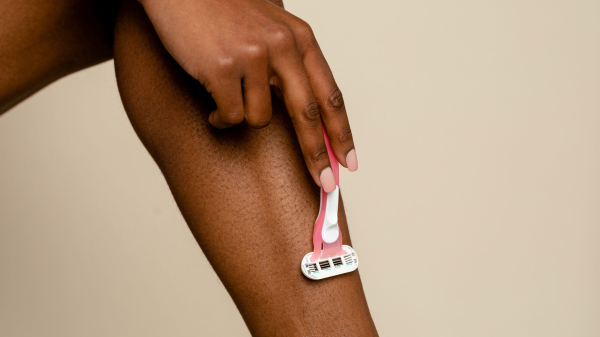
All three dermatologists interviewed for this piece agree that, aside from the risk of accidental cuts that could cause skin trauma, shaving is one of the safest hair removal methods for people with psoriasis. With shaving, “you’re [removing hair] above the follicle, not pulling it out,” Dr. Evans explains.
Dr. Wieder agrees and notes that it’s especially important for people with psoriasis to use a sharp razor and shave in the direction of hair growth rather than against the grain. Both will help ward off the irritation that can trigger Koebnerization. And if you’re trying to navigate around a psoriasis plaque, proceed with caution. “Avoid shaving off the scales because it’ll bleed underneath,” Dr. Wieder says.
Laser hair removal
Laser hair removal might sound like it carries a high risk of causing trauma, but the dermatologists interviewed agree it’s actually one of the safer options for psoriasis patients, as long as it is administered correctly. (Laser burns have the potential to cause, say it with us, Koebnerization.) “Even though you would think [a laser] would be traumatic to the hair follicle, it does seem to be safe,” Dr. Wieder says, pointing to studies on lasers that have shown their potential for treating psoriasis. Dr. Evans echoes this, noting that “heat and light” don’t seem to be an issue for people with psoriasis.
“I do laser hair removal on psoriasis patients all the time,” Dr. Shokeen says. She notes her preference for long-pulsed Nd:YAG lasers (1,064 nm), though she says diode lasers (about 800 to 810 nm) can also work if the settings are dialed down. Either way, it can be a tricky balance to get the levels just right, and the settings will need to be adjusted for each patient.
“If the energy of the device is too low, you’ll actually get hair regrowth,” she says. “It’s complicated to treat a psoriatic patient [with lasers], to say the least.” That’s why she always recommends that people who have psoriasis get laser hair removal in “a physician-supervised, medical-grade setting rather than a standard laser chain. There are more med spas than McDonald’s,” she says, noting her skepticism that all the people employed in those many locations would be fully trained to treat people with psoriasis.
Hair Removal Methods to Approach With Caution
As mentioned above, if your psoriasis is well controlled, you will likely be okay no matter how you remove unwanted hair as long as it’s done carefully. However, these methods carry some extra risks worth considering.
Depilatories
Hair removal creams (depilatories) may be a good option for someone with psoriasis because, like shaving, they don’t cause much trauma to the hair follicles. However, Dr. Wieder notes that these products can be irritating to many people, with or without psoriasis, so she always recommends a patch test beforehand on the areas where you plan to apply the depilatory. If you want to use it on your face, for example, Dr. Wieder recommends trying “some spots under the chin to see if you can tolerate it.”
Waxing
Although people with psoriasis can certainly get waxed, it’s the method that arguably comes with the most risk. “Waxing could pull on the skin and create microabrasions or tears,” says Dr. Evans. She says psoriasis is more likely to develop on areas that have been injured, even if the damage is minor. Dr. Evans also cautions that if the skin is damaged by waxing, new flare-ups could occur even in areas where you didn’t have plaques before.
For this reason, Shailer Carruth, a Vermont-based esthetician who specializes in Brazilian waxing, says she waxes with her eyes as well as her hands. “The first thing I do if I’m going to wax someone who has psoriasis is check for any broken skin,” she says.
If you’re going the DIY route, Carruth recommends using a hard wax, which adheres only to the hair, not the surrounding skin. A sticky strip wax, on the other hand, is going to exfoliate the top layer of skin, which could further aggravate a psoriatic flare-up.
Tweezing
“Plucking is very traumatic to the hair follicles,” Dr. Wieder says, so you’ll want to tweeze with caution if it is your preferred method. While Dr. Evans notes that it’s relatively uncommon to get psoriasis on the face, it’s not impossible, so you should think twice about plucking if you’re prone to getting plaques there.
What to Do If Hair Removal Causes a Psoriasis Flare-Up
Although hair removal is generally safe for people with controlled psoriasis, if you get any micro-injuries during the process, there is a small risk that it could trigger a flare-up. If that happens, Dr. Evans says you can use your topical prescription medication to treat the area. If the flare persists, reach out to your dermatologist.
How AI-Generated Images Are Changing Beauty Consultations
PauseAnimation by Mark Baker-Sanchez/Allure; Photo: Adobe StockSave this storySave this story
Poreless skin with a preternatural glow. Blonde highlights blended so well you can no longer see the individual strands. A nose that’s never even heard of a crook. A hand with individual, intricate tattoo “sleeves” on each finger. Manicures with textures and designs so complex they’d be impossible to recreate. Artificial intelligence has come for the beauty industry, and it seems many clients can’t resist the generative chatbots’ siren song. Experts across fields report a sharp increase in the number of AI-generated images their patients and clients are bringing as inspiration for the service they want provided.
“[Bringing AI-generated images] has become a normal part of the consultation,” says Melissa Doft, MD, a board-certified plastic surgeon based in New York. July, a Leicester, England-based tattoo artist who goes by @inkedbyjuls, says “Nearly 30% of my clients have reached out to me with AI-generated images as a reference for their tattoo ideas in recent months.” While some practitioners are OK with using these as a jumping off point—and understand that some clients who struggle with verbally explaining their vision might find chatbots helpful for translating that idea into an image—everyone we spoke to for this piece agrees that these artificially-generated visuals are largely just setting people up for disappointment.
Many experts interviewed for this story acknowledged that their clients or patients may not even realize they’ve brought something AI-generated, since the online places where people typically get inspiration have become flooded with slop of varying quality. “When I clock the AI, I’m super upfront with them about a realistic result,” Anna Miles, a nail artist based in New York City, says, echoing the general consensus among these pros.
Here, a brief look into how AI-generated images are changing the consultation process across the beauty industry—and where these experts wish you would get your inspiration from instead.
For Plastic Surgery
Plastic surgeons have long cautioned patients against bringing in photos of celebrities as inspiration for their own rhinoplasty/breast implants/tummy tuck. That famous person’s face (or boobs or butt) is not your face, and no amount of amazing (and expensive) surgery will make you look like them.
“Patients arrive having already generated a version of themselves through a beauty app or ChatGPT. They say, ‘This. Make me look like this.’”
So, technically, you could say patients are more closely following doctors’ orders these days. “Years ago, I was the one holding the pencil, sketching a new profile onto a photo of your nose while you watched,” Dr. Doft says. Now, “patients arrive having already generated a version of themselves through a beauty app or ChatGPT, and they hand me the picture and say, ‘This. Make me look like this.’” She notes that some people even come in with a full, AI-generated medical plan, including the procedures they think they need and after-care instructions.
AI is a viable tool for research, but the humans actually performing plastic surgeries know the most about these procedures. “AI generated photos do not take into account anatomic constraints on potential surgical results such as skin thickness, skeletal anatomy for the face and underlying cartilage shape and strength for rhinoplasty,” Dr. Steven Pearlman, MD, a dual board-certified facial and reconstructive plastic surgeon in New York City. “AI does not understand what can and cannot realistically be accomplished in facial plastic surgery.”
“AI does not understand what can and cannot realistically be accomplished in facial plastic surgery.”
There’s also the issue that these generative AI-models are trained to view a very specific type of beauty as ideal. “A generated face optimizes for one thing: so-called ideal proportions [like] wide-set eyes, a small straight nose with a delicate tip, full lips, high cheekbones, and perfect symmetry,” Dr. Doft says. “Plenty of patients love the nose they inherited from their father or the eyes that run in their family, and a generated photo erases all of that in favor of a sameness I see over and over. You lose the individual.”
Both Dr. Doft and Dr. Pearlman agree that patients should seek out a qualified, experienced surgeon who can create an individualized plan. Dr. Pearlman says he does use computer imaging to show rhinoplasty and revision rhinoplasty patients their potential results, but only after carefully examining the patient to see what could actually be achieved.
As far as computer-free inspiration photos go, Dr. Doft recommends patients bring in older photos of themselves or “images of real people whose features feel authentic to them,” saying, “These give me far more to work with than a filtered ideal.”
For Manicures
Although Miles prefers drafting nail art looks with a pen and paper, she understands why clients might turn to generative AI. “AI can be helpful for the client if they can’t explain their concept in full,” she says. She even admits that these programs can occasionally come up with something cool. “Sometimes the computer hits shuffle and makes some valid points, like throwing digital spaghetti at a proverbial wall,” Miles says. “But my imagination is usually better than the logarithmic output.”
“I was relieved they were still hiring an artist to create the work, even though they used AI as a tool to mock it up.”
Sigourney Nuñez, a nail artist based in Los Angeles, recalls one time a brand she was working with presented her with a project brief “just covered with AI-generated photos.” She says it took her by surprise, but ultimately, “I was relieved they were still hiring an artist to create the work, even though they used AI as a tool to mock it up.”
Both Miles and Nuñez say that this type of inspiration creates unrealistic expectations for what a human nail artist can do, but that they’re typically able to bring the client back down to earth after some additional collaboration. Nuñez says she tries to explain that “the inspo pic is just a launchpad” for ideas. “I am not a photo copy machine,” she says. “I am an artist.”
“I am not a photo copy machine. I am an artist.”
Although she’s successfully worked with clients who bring in AI-generated images to align on a manicure concept they both love, Miles says she’s uneasy about the psychological, environmental, and copyright implications of the technology. “I personally love using my brain for creative tasks, but those who aren’t naturally inclined to flex that muscle have now replaced trying with a machine,” she says. “I’m broadly concerned about the atrophy of imagination.”
For Haircuts and Color
Carly Zanoni, a San Diego-based colorist who frequently shares tips with other pros on how to work from clients’ inspo photos, doesn’t mind an AI-generated image. “I love when clients bring inspiration because it gives me insight into the overall vibe they’re going for,” she says. “Is it bright? Soft? High contrast? Lived-in? AI images can communicate that really well.” Sara Briscoe, a colorist in Queensland, Australia, agrees—to a point. “Any visual reference helps, because verbal communication is tough for some people,” she says. “But it stops being useful when the image is so AI that there’s no real texture. The gloss, density and tone are all fake and unachievable.”
“Any visual reference helps, because verbal communication is tough for some people.”
Hannah O’Malley, a hairstylist in Wichita, Kansas who specializes in razor cuts, is vehemently not on board with generated photos and the unrealistic expectations they tend to set. “The AI pictures don’t show real hair patterns or reflect like real color,” she says, noting that this can cause a lot of frustration during the consultation process. “We can’t give clients robot hair.” O’Malley recommends that clients pull inspiration from the stylist’s portfolio; finding looks you like right on their social media account means the stylist is probably going to be able to achieve exactly what you’re looking for. She also recommends Pinterest, as long as you use its tool to filter out AI-generated images.
“We can’t give clients robot hair.”
Zanoni emphasizes that real photos are “the gold standard,” ideally with multiple angles and before-and-after transformation images that haven't been heavily edited. When a client does bring in something totally unrealistic (AI-generated or not), she sees that as a conversation starter. “I usually say something like, ‘I love this as inspiration. Let’s figure out what you love most about it and make a plan to create that feeling on your hair,’” Zanoni says. “Sometimes we can get really close in one appointment, and sometimes it’s more of a journey. I think clients appreciate honesty, and I’d much rather under-promise and over-deliver than promise an AI result that no one could realistically recreate.”
For Tattoos
If there’s one beauty-adjacent industry where the vibes around AI-generated images seem to be particularly negative, it’s tattooing. Of all the people Allure reached out to for this story, tattoo artists were the most likely to bring up ethical concerns—such as generative models being trained on other artists’ work and the environmental implications of using this technology—than pros in other industries. Many artists have explicit bans against sending AI-generated photos as inspiration on their social media and/or booking websites.
“I’ve had clients walk out when I’ve told them I wouldn’t tattoo their AI generated design.”
“I’ve noticed when people AI generate their tattoo references, they become attached to what they’ve received,” says Sam Bradley, a tattoo artist based in Tacoma, Washington who has one of the aforementioned AI bans pinned to the top of her Instagram account. “I’ve had clients walk out when I’ve told them I wouldn’t tattoo their AI generated design, or become frustrated when I’ve redrawn the image they brought in initially.”
Similar to Dr. Pearlman’s concerns about AI inspiration for plastic surgery, tattoo artist Alyssa Stokes says these generative programs simply don’t understand what type of art can actually be done on a person’s skin. “Generative AI does not have the years of experience and proper understanding of flow, contrast, line weight, and skin aging,” Stokes says, noting that the images she’s seen don’t take how a design would work with an individual’s anatomy into account. “It includes way too many details, not enough spacing, and leads the client to believe it is possible when it really isn’t.” Bradley seconds this. “A skilled tattoo artist knows how a design will age over time,” she says. “They have to consider the placement, size, and what techniques need to be used to create a tattoo that stays beautiful.”
“The growing anti-AI sentiment brings me a lot of hope. I think artistry is becoming a lot more valuable to people who seek it.”
Instead of leaning on AI, these tattoo artists want their clients to collaborate with them on a design—and trust them to create something awesome. “As someone who deeply values individual creativity and connection with my clients, [this type of inspiration image] not only takes out a huge part of the trust they need in me to do my job, but starts off my creative flow in an extremely restricted state,” Stokes says. Indeed, many tattoo artists prefer more abstract starting points. “I prefer if they create a Pinterest mood-board, send a written explanation of their idea, and even draw the silliest scribble to describe it,” July says.
“Gone are the days of independent thought, and human creativity,” Bradley says. “Although the growing anti-AI sentiment brings me a lot of hope. I think artistry is becoming a lot more valuable to people who seek it.”